Friday, 20 January 2012

Pete's Media Blog

Here are some examples of previous exam questions:

  • Analyse the ways in which the media represent any one group of people that you have studied. 
  • With reference to any one group of people that you have studied, discuss how their identity has been ‘mediated’. 
  • Analyse the ways in which the media represent groups of people. 
  • “The media do not construct collective identity; they merely reflect it”. Discuss. 
  • “Media representations are complex, not simple and straightforward”. How far do you agree with this statement in relation to any one group of people that you have studied? 
  • What is collective identity and how is it mediated?

We should be able to answer these questions from the Specification:

  • How do the contemporary media represent nations, regions and ethnic / social / collective groups of people in different ways? 
  • How does contemporary representation compare to previous time periods?
  • What are the social implications of different media representations of groups of people?
  • To what extent is human identity increasingly ‘mediated’?

The kinds of thing you might use as case studies include: national cinema, television representations, magazines and gender, representations of youth and youth culture, representations of different ethnic and cultural groups sexuality, gender, disability.

It is pretty open in terms of what you might have studied, so I would expect answers to draw upon very different case study material. This part of the exam asks you to do three more specific things, whatever topic you answer on:

 1. You MUST refer to at least TWO different media
2. You MUST refer to past, present and future (with the emphasis on the present- contemporary examples from the past five years)
3. refer to critical/theoretical positions

 So for 1. you might compare and contrast examples from film and TV or from newspapers and social media. For 2. the main thing is to ensure you have a majority of material from the past five years. There were a number of answers last year which were dominated by older films, so beware of this! For 3. you need some critics/writers who have developed ideas about representation and identity.

You can't cover everything in this exam, as you only have an hour, so you need to be selective and very systematic in your answer. Have case study examples which really illustrate the kinds of points you want to make.

Pete's Media Blog

Thursday, 19 January 2012

Alfie

The film follows the main character, Alfie, a Casanova from London who presents himself as very un-English. Isabel Quigly described him as "Vain, easy going, autocratic, physically fastidious, cowardly, undomestic, irresistible, he is the sort of man once thought totally un-English". However, as the film develops Alfie's character changes to become more traditionally English. Through the character decided to address the audience directly, this enabling us to truly experience his "charm" and personality first-hand. This being an attempt from the writer, or director, to emphasise his revelation.

We find Alfie to be a dominant male character, who creates a sense of hierarchy and superiority between himself and the female characters. When Alfie returns home, there is a very traditional status between man and wife, where the women prepares the food and the man simply relaxes. Stereotypical Londoner who believes that you have to make your own way in life, and use more "illegal" tactics to progress in life.

Alfie is very reluctant to get married, however when Gilda becomes pregnant later in the film is appears they have broken the common beliefs of society. In the 1960s it was still believed that you should get married before having children. In the end, Gilda breaks away from Alfie with her child and forms a new family, this being symbolic of the tradition between what is not respectable and tradition. There is also the issue of love, which Alfie seems to completely neglect, the writer perhaps combating abortion, prostitution etc.

A further scene of interest is when Alfie visits Ruby's, being an American we find her to represented as more powerful than other women in the film and has a more business approach to everything.

The audience may also notice that Alfie refers to women as "gal" or "bird" at the beginning, and the new born baby as "it" rather than "he" or "she". This proves that Alfie has a lack of respect for these other characters, but is soon forced to change his treatment of others later in the film.

Another naive young women, Annie, tries to do everything she can to please Alfie. However we becomes flippant with her, after telling her than he doesn't appreciate having the same type of food over and over again. This results in the first rebellion from a women against Alfie, as she packs her stuff and leaves without any command - this could be seen as a real turning point in Alfie's character.

The next significant scene would be the abortion. Of-course this challenges the Casanova identity which Alfie seemed to uphold earlier in the film, questioning whether it is moral to 'sleep around', guiding the audience to take the more traditional route. Male british identity is represented as someone who always "knows a guy who can fix it", and the same principle is applied to this abortion, even if it means that it's illegal and painful.

After going through with the abortion, Alfie returns to his home to find the remains of the new life. At this point we see Alfie present real emotion through crying, as he truly realises that his "moral lapse" has effectively "murdered" a child. Alfie obvious feels guilty as he recognises that his entire lifestyle is "playing" with people's life, but also new life as a whole. This is later emphasised by a scene where Gilda is seen with her new family at the baptism of her second child, she has been able to move on.

Male british identity is then proved to change after a realisation, with his attempt to create a good relationship with Ruby but finds her to be just as bad as he.

Alfie's final speech to the audience summarises his thoughts:

  • "I think of all the things they've done for me, and the little I've done for them" - on the women that he's been with, and the trouble which British male identity causes.
  • Alfie lists what he has achieve, "I've got a bob or two, some decent clothes, a car, I've got my health back and I ain't attached". Most of these items are material showing some sort of important in money and power for males. The reference to "I ain't attached" suited Alfie's previous Casanova mindset.
  • "I ain't got my peace of mind, and if you ain't got that you ain't got nothing." - a male Casanova like Alfie is stuck and his past will forever haunt him.
  • "What's the answer... what's it all about" - Alfie's final line, perhaps about life. What is important for any of us? What is the right thing or the wrong thing to do? Alluding to the question of which way modern British males, like Alfie, should behave.

Tuesday, 17 January 2012

Textual Examples

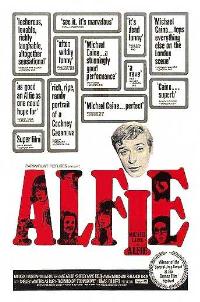
Film - Alfie (1966) - Past Example


Directed by Lewis Gilbert
Written by Bill Naughton
Starring Michael Caine, Shelley Winters, Millicent Martin.
"Alfie tells the story of a young man who leads a promiscuous lifestyle until several life reversals make him rethink his purposes and goals in life. Alfie frequently breaks the fourth wall by speaking directly to the camera narrating and justifying his actions. His words often contrast with or totally contradict his actions."
TV Show - Life on Mars - Representation of past 

BBC Television
Starring John Simm and Philip Glenister
 
"Life on Mars tells the fictional story of Sam Tyler (John Simm), a policeman in service with the Greater Manchester Police. After being hit by a car in 2006, Tyler awakes in 1973 and finds himself working for the predecessor of the GMP, the Manchester and Salford Police at the same station and location as in 2006. Early on in the series, it becomes apparent to Tyler that he awakes as a Detective Inspector, one rank lower than his 2006 rank of Detective Chief Inspector. As part of the Criminal Investigation Department, Tyler finds himself working under the command of Gene Hunt (Philip Glenister). Throughout the two series, the central plot centres on the ambiguity concerning Tyler's predicament of it being unclear to both the audience and the character whether he has died, gone mad, is in a coma or has actually travelled back in time"

Film - Tyrannosaur (2011)- Modern example


Written and Directed by Paddy Considine
Starring Peter Mullan, Olivia Colman, Eddie Marsan
 
"Joseph, an unemployed widower with a drinking problem, plagued by violence and a rage that is driving him to self-destruction, undergoes a life change after killing his dog in a fit of rage. Desperate to change his ways and get out of his unpleasant past and surroundings, he earns a chance of redemption when by chance he becomes close to local charity shop (Thrift Store/Op Shop) worker Hannah, a respectable wholesome and kindly Christian woman who takes pity on him, and they become close friends. However Hannah has a dark secret of her own which threatens to plunge Joseph back into his former life."

Monday, 16 January 2012

Media Theory: Identity

Althusser's theory
Louis Althusser was a French Marxist (someone who looks to the economy and peoples needs in the development of society), he believed that things came together structurally from the real and from imagination. The philosopher saw ideology as the force which shaped a person and their consciousness, rejecting that humans were motivated by economic success. In his theory, media is affected and has an affect on the subject, whereas new media theorists argue that the subject can see meaning in the media.
Althusser has greatly altered the way Marxists view media.

In relation to identity, the representations of subjects are therefore affected by our own real knowledge of society. Althusser would see that the subjects/characters in media do not add meaning to the media.

Representing Identity
David Gauntlett from University of Westminster researched how people represent themselves, and how our perceptions of identity works. Using Lego, he got participants to represent thoughts through a visual medium, and asked them to use metaphors which enabled them to reflect on this. There were eleven findings:
  • Creative and visual research methods give people the opportunity to communicate different kinds of information. People are able to think about this and reflect on it, this is because visual or more practical methods of research gives a higher sense of connection.
  • Metaphors are important, so abstract feelings and thoughts can be easier through visuals, media or acting. In this way we are able to look at society as a whole through media as a whole.
  • People need to time to reflect on society or themselves, this can cause the subconscious to "bring things to the surface". It allows an abstract experience to be represented in a mediated way.
  • People have knowledge of identity, they know what it means and how it can be represented through aspects of their life. This proves that it's an important issue for society.
  • Two theories that are commonly known (in simple terms). They were aware that they were constructing a narrative or story about themselves, and that there are two identities - the ones at the front and the ones which are hidden.
  • Identities are generally consolidated and clear, they are not fragmented. People had a desire to be coherent and to belong to an identity.
  • There is a desire to be different to everyone else, but still want to be part of society (a community). This is like George Simmel (1893), "On the one hand the individual belongs to a whole and is part of it, while on the other hand they're independent and stand opposed to it.
  • Media studies is too must about media, people's identities are not controlled or affected by the media. We should not assume their identities due to media influence.
  • The audience is complex.
  • People do not generally think that media affects their identity, or their everyday life.
  • Media has a role in thinking about identity because media productions enable us to think about life through frames and narratives. These narratives have turning points and themes which we can reflect on life with.
  • Paul Ricoeur suggests narratives offer "a vast laboratory for thought experiments' becomes especially pertinent in the new media age".
  • The study proved the tensions we suffer in everyday life, and what is obvious to people.
The main point is that media is based on archetypes. His book "Media, Gender and Identity" follows more in depth analysis, which would be beneficial for this topic. You can read the book here.

National Identity
An article on how internet usage effects national identity after the UN released a Human Development report in 1999. The writer argues that countries with more money are able to afford better internet access, and there is generally a higher demand for it. It is clear that even in the early days of the internet, people were able to see that it offered a sense of freedom, and was "a phase change" that would need "massive increase in political freedom". Again later on it is speculated that "Among nations of relatively equal development, it will be the freer nations and not the richer ones that adopt the internet fastest". There is also allusion to "potential for human development", combined with the freedom will allow new thoughts, new theories, the spread of ideas to be quicker and the acceptance of different identities to be easier.

Theodor Adorno
Adorno argued that capitalism fed people with "culture industry" products which kept people accepting and uninterested in politics. Unlike Marx, Adorno placed emphasis on the role of culture in the current state of society, rather than economics. He saw popular culture as the reason people were accepting and satisfied, whilst still having a lack of interest in overthrowing the capitalist system. Adorno now believes that culture industries create unsophisticated and sentimental products replacing more complex art forms -  resulting in people not questioning social life (and identity). There are a few keywords which he often used:

  • False needs - created and promoted by the capitalist system, and replace the 'true' needs of freedom, expression and creativity.
  • Commodity fetishism - social relations and culture experiences are objectified in terms of money, and we put value in the cost of something.
  • Standardisation - popular media and music are very similar and have a structure.
  • Pseudo-individualisation - when small differences make something appear distinctive, but they're not.
Products of the culture industry can be emotional but Adorno saw this as more of a cathartic process. In modern-day terms, TV and other media has prevented people from talking and questioning problems in their lives. Adorno thought lives were like a ongoing, repetitive cycle.


Two Media Areas

We have decided that we are going to focus on TV and film as our two media areas. However, written media such as newspapers would also be a good media to have some knowledge of, this giving us extra reference.

We need to have a variety of examples from both TV and film, so productions that are made in different periods will give a range of views on British identity.

Film:
  • Past example - "If" - directed by Lindsay Anderson.
  • Past example - "Alfie" - directed by Lewis Gilbert.
  • Modern example - "An Education" - directed by Lone Scherfig.
  • Modern example - "Fish Tank" - directed by Andrea Arnold.
TV Show:
  • Past example - "Ashes to Ashes" or "Life on Mars".
  • Modern example - "Skins"or "Misfits"


Friday, 13 January 2012

Exam Requirements

In preparation for the exam students must:
  • Engage with a range of theoretical perspectives 
  • Demonstrate a personal position on the issues 
  • Know about research carried out to discover audience practices and habits (this could be research carried out by themselves) 
  • Exam answers must have a historical, contemporary and future perspective, focussing mostly on the contemporary. 
  • Emphasise the active audience i.e. how people 'give meaning' to cultural products (media texts). 
  • Have an understanding of two different areas of the media ie. film, television, internet, magazines, etc.

Newspaper Analysis

Newspapers are a good media source that represent different identities and segments of society. Media organizations generally favor one party and focus on one type of news, for example, gossip news in the Daily Star or the Daily Mirror.


The Guardian - Priced at £1.20, it's the most expensive out of the papers. It's aimed at people in public sector and graduates with high paid jobs, or the middle class. The Guardian follows more liberal outlook, which promotes equal rights and freedom to express your identity.  There are many different sections to the Guardian as it's a really big broadsheet, there's Sport, Entertainment, Financial etc, along with supplements such as "The Truth About How Cambridge Picks Its Students". With all these sections, the paper comes across more cultural with movies, theatre and the arts. The articles in the first few pages are either political issues concerning the UK, international news and race issues.


The Times - Price at only £1, which is an attempt to bring in a larger audience. The paper has downsized to a tabloid size, but it was traditionally broadsheet. Rupert Murdoch owns the news corporation under News International which also owned The News of The World (it got closed down), and it still owns Sky. The paper could be seen as a more 'intelligent' version of the Sun, as it's aimed at professional but still has a smaller readership. There are sections similar to the Guardian, giving it a cultural feel.

Cambridge News - Priced at 50p and owned by Archant Media that focuses on regional news. The newspaper tries to promote good news in the local area, this is an attempt to raise community spirit and morale. This is very important in the current economic climate where the society can get depressed with bad news. The sport section and page 4 are the same in all of the Archant Media, this helps to promote the company and gives a sense of connection with the rest of the community. We have noticed that most of the images included have people smiling, again this adds to the upbeat atmosphere.

Daily Mirror - Marketed as "Real News.. Real Entertainment", and features gossip news on the front page rather than politics and "important" issues. The articles are generally about celebrities or shocking stories about members of the public.  The Daily Mirror supports the Labour party, and has as section for politics using this to mock the current Conservative government, this is an attempt to vocalize which Labour supporters think. It's reactionary, they react and support whatever views the country follows at that time.

Daily Star - Priced at 30p, again it's a gossip paper which could be seen as a socially acceptable gossip for men. Again the articles are mostly about sport and celebrities, with lots of large photos and uses some adverts. These gossip newspapers can make the readers appear very unconcerned about politics, and generally have little intelligence.

Newspapers not only represent different identities in their articles, but show us what the identity of the readers is too. This can be particularly helpful when considering what Britain's identity really is.